Effects of Caffeine Intake on 20–30-Year-Old Athletes Reaction Time According to the Stroop Test: A Critically Appraised Topic


Carlos Vallejo, MAT-2
Graduate Athletic Training Student
School of Allied Health
Department of Athletic Training
Oklahoma State University – Center for Health Science
1111 West 17th Street,
Tulsa, OK 74017
carlosvallejo10@okstate.edu


Kayli Murphy, MAT-2
Graduate Athletic Training Student
School of Allied Health
Department of Athletic Training
Oklahoma State University – Center for Health Science
1111 West 17th Street,
Tulsa, OK 74017
kayli.murphy@okstate.edu


Matthew O’Brien, PhD, LAT, ATC, PES, CES
Professor & Director of Clinical Education
School of Allied Health
Department of Athletic Training
Athletic Training Program
Oklahoma State University – Center for Health Science
1111 West 17th Street,
Tulsa, OK 74017
matthew.obrien@okstate.edu


Key Points
Clinical Question: In team-sport athletes ranging from 20 to 30 years of age, does caffeine consumption decrease reaction time according to the Stroop Test?

Clinical Bottom Line: Male and female team sport athletes did not register any significant changes in their reaction time performance as measured through the Stroop test. This implies that caffeine supplementation does not have any significant effects on reaction time in athletes, so individuals can utilize caffeine in recommended dose ranges without concern for adverse effects on their reaction time in their sport.  


Clinical Scenario
Caffeine is the most commonly used psychoactive substance worldwide with approximately 80% of the population consuming an average of 200mg per day. At least 60 different plants contain naturally occurring caffeine, but it can also be synthetically created.1 While it is mostly found in coffee, tea, and soft drinks, it is also synthetically created and added to supplements, energy drinks, and food products making it an integral part of daily life for many individuals. Adults rely on coffee to focus throughout their workday, while student-athletes often turn to energy drinks to stay awake throughout their daily lives including team related events and classes. The age range with the highest reported consumption was found to be 50 to 64 years of age, however there has been a significant increase in recent years among younger populations, including student-athletes, with approximately 86% of athletes reporting habitual consumption.3, 4

Caffeine’s role in athletic performance has been a highly controversial topic due to its perceived performance enhancing capabilities over the past several decades. The World Anti-Doping Agency (WADA) originally placed caffeine on the banned substance list in 1987, while the National Collegiate Athletic Association (NCAA) listed it on restricted stimulant list just prior to that in 1984.5, 6, 7 The current restricted urinary concentration for a positive test remains at 15 micrograms/mL.7 This level would require an individual to consume over 500mg of caffeine, equivalent to 6 to 8 cups of coffee, within two to three hours prior to testing.8 Since WADA has removed caffeine from the banned substance list in 2004, caffeine usage among athletes has risen approximately 76%.6

While these restrictions were put into place to reduce unfair advantages during competition, it also encourages young individuals to avoid consuming unhealthy amounts of caffeine that could potentially lead to more serious health risks, such as digestive issues, cardiovascular problems, and osteoporosis. However, in low to moderate (3mg/kg to 6mg/kg) doses, caffeine has been known to provide an increase in certain aspects of physical performance.2, 9 Some research has suggested that it can increase peak power per unit of body weight by approximately 13%.10 Other research has indicated that it can decrease the rate of perceived exertion during endurance exercise.11 Depending on the method of consumption, there is potential for other benefits outside of physical performance when caffeine is taken in the optimal window of 40 to 60 minutes prior to exercise.12

While there are many reasons for why athletes consume caffeine, 61.8% of athletes chose to consume caffeine “to feel more awake and alert”.4 This refers to the cognitive function of the brain that helps people with the mental process of thinking, memorizing, and reacting. These functions are essential in everyday life for adequate mental and physical health.13 For athletes, there are many variables that factor into performing at the highest physical level possible, however cognitive performance is a key pillar of performance that is often overlooked. Even though there has been extensive research on the physiological responses of the body to caffeine intake such as the increased heart rate, blood pressure, and diuretic effects, there is currently a lack of evidence on how it can affect cognitive performance, primarily reaction time. This can be defined as the time interval between a stimulus and the response that is initiated to it. Athletes are constantly reacting to different situations around them, which creates the need for quick responses to continue performing at a high level.

The Stroop Effect was first published by John Ridley Stroop in 1935 which identified that subjects took longer to state the color of a red patch than it did to read the word “red”.14 The Stroop test was developed to measure reaction time by comparing how quickly a subject can respond in different types of trials. The three types of the Stroop test include congruent, incongruent and neutral trials with the former two being the trials utilized in the included studies. In congruent trials, the color-word matches the font-color, but incongruent trials use different font-color than the color-word to make the trial more difficult for the subject.14 The subject is presented with a two-dimensional test in which there is a color-word written in a specific font-color, and they must differentiate between the two as quickly as possible with their reaction time being measured in milliseconds.14, 15

Focused Clinical Question (PICO)
In team-sport athletes ranging from 20 to 30 years of age, does caffeine consumption decrease reaction time according to the Stroop test?

Search Strategy:
A computerized search was conducted in October 2025 to November 2025. Studies must have been published in English in the year 2015 or later. The search terms used were:

● Patient group: Athletes ranging from 20 to 30 years of age
● Intervention: Caffeine consumption
● Comparison: Placebos
● Outcomes: Reaction time based on the Stroop test

Sources of Evidence Searched
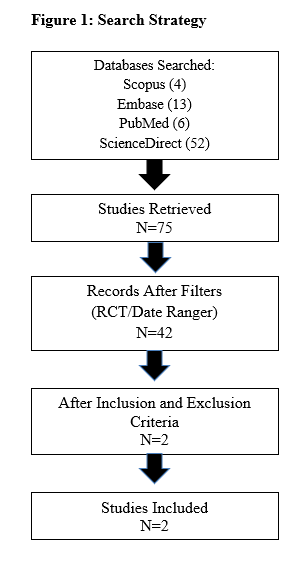
● Embase: Initial search results: 13, after result filters (RCT/Date Range): 9,
inclusion/exclusion criteria applied: 1
● Scopus: Initial search results: 4, after result filters (RCT/Date Range): 3,
inclusion/exclusion criteria applied: 1
● PubMed: Initial search results: 6, after result filters (RCT/ Date Range): 5,
inclusion/exclusion criteria applied: 2
● Science Direct: Initial search results: 52, after results filters (RCT/ Date Range): 23,
inclusion/exclusion criteria applied: 0

Inclusion Criteria
● Studies must be published in the English Language
● Studies must be published after 2015
● Studies must contain subject population between 20 to 30 years of age
● Studies must include team-sport athletes
● Studies population must include subjects who consume less than 300mg of caffeine/day
● Studies must compare caffeine only to a placebo agent
● Studies must utilize the Stroop test to measure reaction time
● Studies must be categorized as a Level 2 evidence or higher on the Oxford CEBM Scale

Exclusion Criteria
● Studies that were not written in the English language
● Studies that were published outside of the last 10 years
● Studies that did not compare caffeine with a placebo
● Studies in which subjects consumed more than 300mg of caffeine/day
● Studies that combine caffeine with other supplements
● Studies that included non-athletes as the subject population

Key Search Terms
● Caffeine AND reaction time AND team sport AND athlete AND placebo AND stroop test


Evidence Quality Assessment:
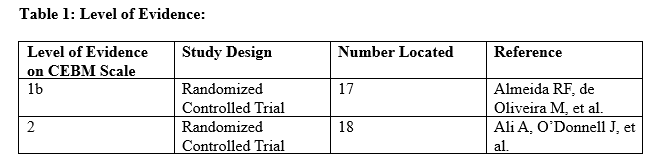
All studies included were assessed by the authors (CV, KM) using the Oxford Centre for Evidence-Based Medicine (CEBM) scale. The CEBM scale website rates randomized controlled trials as a level 1b or 2 based on the design of the trial. Based on the scale, level 1b studies have thorough inclusion and exclusion criteria while also incorporating single- or double-blinding procedures.16 The studies included in this trial resulted in a Level 1b (Almeida, et al.) and Level 2 (Ali, et al.) evidence in accordance with the CEBM scale.16

Internal validity increased due to the design of the Stroop test presenting universal outcomes for reaction times in the individuals. Prior to each study, individuals were told to take an abstinence from caffeine usage for several days ranging from 7 to ten days to ensure equality throughout the trials. Subjects from one study (Almeida, et al.)17 were given 5mg of caffeine 45 minutes before exercises while the other group of subjects (Ali, et al.)18 were given 6mg of caffeine 60 minutes before exercising. The authors were also aware that one study consisted of all males, while the other consisted of only females; however, they both addressed the sport-specific inclusion criteria.

External validity was assessed to be low to moderate because of the low subject participation in the trials. Throughout the studies, team-sport players were the main focus, expanding to other athletes would increase the validity of the results. Each study also prioritized limiting the caffeine consumed prior to starting the trial which would make the results less applicable to athletes that habitually intake more than 300mg/day because they are likely to have a higher caffeine tolerance.


Results of Search: Summary of Search, “Best Evidence” Appraised, Key Findings
The databases utilized to find the studies evaluating the effects of caffeine on cognitive performance included PubMed, ScienceDirect, Scopus, and Embase.
Results were moderate, all randomized, with a small sample size due to team-sport specificity.

● The search of literature resulted in 75 possible studies for consideration.
● Two studies met the inclusion criteria.17, 18
● The studies in Figure 1 were found to be the best evidence and were selected for inclusion.

In each respective study, subjects were assessed to meet the inclusion and exclusion criteria to participate. There were various levels of participation in their sport. Their caffeine consumption prior to the study was assessed and then they were asked to abstain from caffeine usage several days prior to the trial. Prior to each study, the participants were familiarized with the exercise program that they would be participating in during the trial. After the familiarization process, Almeida et al. provided a 5mg/kg dosage of caffeine 45 minutes prior to exercise, while Ali et al. provided 6mg/kg dosage of caffeine 60 minutes prior to exercise. This aligns with the FDA recommendation that states the optimal time for caffeine consumption is 40 to 60 minutes prior to activity.19 Study participants then engaged in their individual exercise protocols. However, according to the Stroop test, the results of both studies suggested that caffeine does not significantly affect or decrease reaction time in these patients compared to a placebo (p=0.009, p=0.045, p=0.005, p = 0.072).17, 18


Table 2: Summary Table

Authors Almeida RF, de Oliveira M, et al. Ali A, O’Donnell J, et al.
Title Effect of acute caffeine ingestion on cognitive performance before and after repeated small-sided games in professional soccer players: a placebo-controlled, randomized crossover trial. Caffeine ingestion enhances perceptual responses during intermittent exercise in female team-game players.
Study Design Randomized Controlled Trial Randomized Controlled Trial
Participants - N=12
- All Males
- Aged 29 ± 4.1 years
- 78.1 ± 7.7kg
- Each subject either got 5mg.kg1 of caffeine or a placebo solution prior to the SSG exercise protocol.
- N=10
- All Females
- Aged 24 ± 4 years
- 59.7 ± 3.5kg
- Each subject either got 6mg.kg1 of caffeine or a placebo pill with 500mL bolus of water prior to their exercise protocol.
Inclusion & Exclusion Criteria
Inclusion:
Males, active in soccer training, no current injuries or illnesses, familiar with the trial procedures
Exclusion:
Subjects currently suffering from illness or injuries, subjects returning from injury, subjects utilizing psychoactive or psychodepressive drugs, subjects with the presence of Daltonism (red/green colorblindness), and subjects that play the goalkeeper position
Inclusion:
Females, subjects had to provide written consent, participate in team sports, and no presence of injuries or illnesses
Exclusion:
Subjects suffering from current injuries or illnesses, subjects that did not participate in team sports, and subjects taking other supplements with caffeine
Outcome Measures
Measurements were taken 45 minutes after the caffeine or placebo was ingested, and immediately after the exercise protocol.
- Congruent Stroop
- Incongruent Stroop
- Neutral Stroop

Cognitive function was assessed before their exercise protocol, 45 and 90 minutes of exercise, and 12 ± 2 hours after exercise.
- Stroop test
- Choice reaction time
Results
- Small-sided game protocol resulted in a faster response during all Stroop test trials. (p=0.006, p=0.003, and p=0.005 during the congruent, incongruent, and neutral trials, respectively)
- There was no significant difference between the placebo and experimental groups.

- The Stroop test did not identify any significant effects of caffeine on reaction time. (p=0.884)
- The choice reaction time test indicated an insignificant tendency for faster reaction times with caffeine ingestion. (p=0.087)
Evidence Quality Score CEBM Level 1b CEBM Level 2
Supports Answer No No

Results of Evidence Quality Assessment
A search was conducted to obtain studies that were directly associated with the PICO question. After conducting the computerized search, two studies were identified that fit the inclusion and exclusion criteria and then evaluated according to the Oxford CEBM. Each study maintained their own inclusion and exclusion criteria that qualified subjects to participate in the respective study. The subject populations were given a dosage of caffeine ranging from 45 to 60 minutes prior to exercise.17, 18 Each study utilized the Stroop test14, 15, part of this appraisal's inclusion criteria, to measure the changes in reaction time that were associated with caffeine usage. According to the CEBM, randomized controlled trials can either be considered a Level 1b or 2 based on the quality of study as well as the blinding. The compiled studies have a Level B Strength of Recommendation.16 This is primarily due to the small patient populations associated with both studies as well as the CEBM Level 1b17 and Level 218 evidence for the included studies.16

Clinical Bottom Line
The current evidence across the studies included in this critically appraised topic are moderate and inconsistent, with no significant effects on reaction time demonstrated in team-sport athletes based on the Stroop test. The inconsistencies that were identified across the studies were likely attributed to several methodological differences, such as variations in the exercise protocols, caffeine dosage, and dosage time. Almeida et al. used multiple trials of the Stroop test (congruent, incongruent, and neutral) to evaluate their subject’s reaction time17; however, the Ali et al. only utilized the incongruent Stroop test.18 Despite these differences, the Stroop test is considered to have high reliability and validity, and it displayed that there was no consistent evidence that proved caffeine consumption decreased reaction time in team-sport athletes.14, 15 Further research is needed to conclude these findings and fully understand the impact of caffeine on the athletes’ reaction time.

Strength of Recommendation
According to the Oxford Center for Evidence Based Medicine (CEBM), the compilation of studies gathered in this critically appraised topic received a B based on the Level 1b17 and Level 218 evidence. Our recommendation is based on consistent outcome measures, small subject population, inconsistent methods, and well-designed randomized controlled trials.

Implications for Practice, Education, and Future Research
As of 2015, the consumption of caffeine amongst elite athletes was approximately 74% prior to or during sports competition20 with endurance athletes typically having the highest reported usage of caffeine across all sports.20 Caffeine use occurs for many different reasons such as improved alertness, focus, mood improvement, and some potential aspects of physical performance.20 However, there have been questions in regards to its effects on cognitive performance, specifically reaction time. Strength, power, and speed are major physical components that are taken into account when considering how successful an athlete is within their sport. However, cognitive performance is an underrated aspect of athletics because reaction time is incredibly important in team sports as well as individual sports.21 Based off of this appraisal, caffeine consumption has shown to have insignificant effects on reaction time in team sport athletes.17, 18 While this indication of a lack of perceived impact on cognitive performance exists, education on caffeine intake and dosage amount for individuals is important to ensure that coaches and athletes are aware of the other possible health related impacts caffeine may produce. While it was not shown to have a significant effect on reaction time, it is still important to educate the individuals that consume it about the other effects it may have on their body such as the risks of increased heart rate, insomnia, increased urination, and possible decreases in bone health depending on the amount that is consumed.22

There was not a large amount of research on how caffeine by itself specifically pertains to the effects on reaction time, but a majority of the literature that was identified for this critically appraised topic included the usage of the Stroop test to measure the differences in reaction time. For any future research conducted, the Stroop test is a valid measure that should be utilized to investigate the effects of caffeine on reaction time due to its validity and reliability.14, 15 However, other test measures, like the Batak Lite test, should be utilized in future research along with the Stroop test.14, 15, 23 The Batak Lite test utilizes a game format to analyze reaction time by requiring subjects to physically contact illuminated LED targets on the wall as quickly as possible within a 30 second time period. Unlike the Stroop test, this tool incorporates more physical movement when testing reaction time, which could be more applicable to sport activities. Sport specific measures should be included as well to increase the generalizability of the study data. Although there is some current evidence24, future research could include the comparison of other ergogenic aids to caffeine to investigate a better possible alternative for caffeine to increase athletes’ reaction time. Future studies should examine individual sports, such as track athletes, to determine if these factors could influence reaction time during block starts.

Researchers should also attempt to perform studies with individuals that have never consumed caffeine to identify the possible effects of native usage. Many individuals rely on caffeine consumption for different aspects of their lives, so this study design would minimize factors like dependency or desensitization of caffeine. Future researchers should also maintain the proper low to moderate dose of caffeine when constructing their study design to remain in the FDA safety guidelines. However, it could be beneficial to determine what kind of effects different intake times have on reaction time such as during exercise instead of prior to the activity.

Researchers should also include both males and females in combined study populations that are undergoing the exact same exercise protocol as well as dosage time. This would further enhance the validity and generalizability of the study methods.
Lastly, researchers could expand the subject population size to increase the diversity in age and gain higher statistical power25 which would improve external validity of the data information. It is important to understand that this information is relevant to athletes at all ages and competition levels because of the widespread usage of caffeine, so future research should be conducted to gain more consistent insight into its effects on reaction time. 


References

1. Samoggia A, Rezzaghi T. The consumption of caffeine-containing products to enhance sports performance: an application of an extended model of the theory of planned behavior. Nutrients. 2021 Jan 24;13(2):344.

2. Evans J, Richards JR, Battisti AS. Caffeine. StatPearls. Published May 29, 2024. Accessed October 28, 2025.

3. Mitchell DC, Knight CA, Hockenberry J, Teplansky R, Hartman TJ. Beverage intakes in the U.S. Food and Chemical Toxicology. Jan 2014;63:136-142.

4. Williams D, Acquaviva J. Caffeine intake for division II athletes: how much and why. Food Sci & Nutr Res. 2025;8(2):1-4.

5. Augilar-Navarro M, Muñoz G, Slinero JJ, et al. Urine caffeine concentration in doping control samples from 2004 to 2015. Nutrients. 2019;11(2):286.

6. Diel P. Caffeine and Doping- What Have We Learned since 2004. Nutrients. 2020;12 (8).

7. Rosenberg M. NCAA limits caffeine intake. Vermont Cynic. Published on April 21, 2022. Accessed on October 29, 2025.

8. Perkins L. Risks of energy drinks for athletes: know what your body is consuming. Swimming World Magazine. August 13, 2025. Accessed October 29, 2025.

9. Pickering C. Kiely J. Are low doses of caffeine as ergogenic as higher doses? A critical review highlighting the need for comparison with current best practice in caffeine research. Nutrition. 2019;67-68.

10. Sun F, Siu AYS, Wang K, et al. Effects of Caffeine on Performances of Simulated Match, Wingate Anaerobic Test, and Cognitive Function Test of Elite Taekwondo Athletes in Hong Kong. Nutrients. 2022; 14(16).

11. Doherty M, Smith PM. Effects of caffeine ingestion on rating of perceived exertion during and after exercise: a meta-analysis. Scand J Med Sci Sports. 2005;15(2):69-78.

12. Pickering C, Kiely J. Are the current guidelines on caffeine use in sport optimal for everyone? Inter-individual variation in caffeine ergogenicity, and a move towards personalised sports nutrition. Sports Med. 2017;48(1):7-16.

13. Manci E, Herold F, Ozdalyan F, et al. Determining cognitive performance in athletes: a systematic review focused on methodology of applying cognitive tests. Scand J Psychol. 2025 Mar 7;66(4):523-552.

14. Sahinoglu B, Dogan G. Event-related potentials and the stroop effect. Eurasian J Med. 2016;48(1):53-57.

15. Savaş DDE, Yerlikaya D, Yener GG, Tanӧr ӦӦ. Validity, reliability and normative data of the stroop test Çapa version. Turk Psikiyatri Derg. 2020;31(1):9-21.

16. OCEBM Levels of Evidence. Centre for Evidence-Based Medicine (CEBM). University of Oxford. 2020. Accessed November 4, 2025.

17. Almeida RF, de Oliveira M, Furigo IC, et al. Effect of Acute Caffeine Ingestion on Cognitive Performance before and after Repeated Small-Sided Games in Professional Soccer Players: A Placebo-Controlled, Randomized Crossover Trail. Nutrients. 2023;15 (14).

18. Ali A, O’Donnell J, Hurst PV, et al. Caffeine ingestion enhances perceptual responses during intermittent exercise in female team-game players. J Sports Sci. 2016;34(4):330-341.

19. Pickering C, Kiely J. Are the current guidelines on caffeine use in sport optimal for everyone? Inter-individual variation in caffeine ergogenicity, and a move towards personalised sports nutrition. Sports Med. 2017;48(1):7-16.

20. Guest NS, VanDusseldorp TA, Nelson MT, et al. International society of sports nutrition position stand: caffeine and exercise performance. J Int Soc Sports Nutr. 2021;18:1.

21. Blacksburg Eye Associates. Improving Reaction Time in Sports. Blacksburg Eye Associates website. Accessed December 2, 2025.

22. Cleveland Clinic. How Caffeine Affects Your Body and Mind. Health Essentials. Published March 19, 2025. Accessed November 11, 2025.

23. Gierczuk D, Bujak Z. Reliability and accuracy of batak lite tests used for assessing coordination motor abilities in wrestlers. Pol J Sport Tourism. 2014;21(2):72-76.

24. Giesbrecht T, Rycroft JA, Rowson MJ, De Bruin EA. The combination of L-theanine and caffeine improves cognitive performance and increases subjective alertness. Nutr Neurosci. 2010 Dec;13(6):283-90.

25. Andrade, C. Sample size and its importance in research. Indian J Psychol Med. 2020;42(1):102-103.