THE IMPACT OF METHODOLOGY ON THE RELIABILITY OF ANCESTRY ESTIMATION FROM SKELETAL REMAINS.
Rebecca Nelson, MSc Forensic Science
Oklahoma State University
Address: Nordstrandveien 49B 8012 Bodø Norway
Email Address: Rebecca.nelson@okstate.edu
ABSTRACT
Objective: To analyze the influence of different osteological methodologies on the accuracy and reliability of ancestry estimation in forensic anthropology. Methods: This study evaluates the transition from traditional morphological assessments (trait lists and three-group models) to modern metric and mixed-method approaches. Data were synthesized from previous literature, including accuracy rate assessments from the Forensic Anthropology Database for Assessing Methods Accuracy (FADAMA). Results: Traditional morphological methods are limited by subjectivity and interobserver error. Metric analyses utilizing precise skeletal measurements significantly improve accuracy, with studies reporting success rates between 90.9% and 97.1% when utilizing modern statistical tools and diverse reference datasets. Conclusion: A mixed-method approach that integrates quantitative metric data with qualitative morphological observations is essential for reliable identification. Forensic anthropologists must move away from typological racial categories toward probabilistic biogeographic ancestry estimations to maintain ethical and scientific standards.
Key words: Forensic anthropology, skeletal remains, ancestry estimation, metric analyses, morphoscopic traits, biological profile, biogeographic ancestry, human variation.
Introduction
Forensic anthropologists aid law enforcement and medical examiners by analyzing human remains, specializing in trauma analysis, PMI estimation, and biological profile construction. Ancestry estimation presents a unique challenge in forensic analysis due to the complexity between skeletal morphology and socially defined racial categories. Current methods often link these social classifications, regional origin, and skeletal traits, as practice with a historically problematic foundation. Despite these origins, the need for some level of ancestry estimation remains in forensic contexts.
Traditional methods, such as trait lists and the three-group model, are criticized for subjectivity and oversimplifying human variation. Traditionally, forensic anthropologists relied heavily on anthroposcopy, the visual inspection of specific physical traits morphoscopic traits on the skull.1 These methods struggle with mixed ancestry cases and perpetuate outdated racial typologies. The Three-Group Model isn't a single method but a statistical framework. It typically uses metric analysis, precise measurements of the cranium, compared against a database. This model uses Discriminant Function Analysis (DFA) to classify an unknown set of remains into one of three reference groups based on a mathematical fit.2 The introduction of metric analyses, involving precise skeletal measurements and statistical comparisons to reference data, has significantly improved accuracy. Studies have shown a noticeable increase in accuracy rates when metric data is combined with traditional morphological assessments, highlighting the importance of this mixed-method approach.3 4
Medicolegal studies involving human remains depend considerably on forensic anthropology. Forensic anthropology offers specific knowledge in the examination of skeletal, decayed, or otherwise unidentified human remains, therefore bridging the field of archaeology, physical anthropology, and forensic science. When the state of the remains limits conventional forensic techniques, their knowledge is vital. This involvement covers historical or archeological settings involving human remains, human rights inquiries, and catastrophe victim identification. Forensic anthropology is essential because it can provide law enforcement, medical examiners, and other investigating bodies with useful information from skeletal remains.
Importance of Ancestry Estimation
While complicated and ethically sensitive, ancestry estimation in forensic anthropology can offer important investigative results in the identification of unknown human remains. Forensic anthropologists infer biogeographic ancestry, which represents population-level changes in skeletal features resulting from genetic drift, adaptation, and historic migration patterns, not race as a biological entity. When comparing missing person databases to unidentified remains, this data helps reduce the pool of possible matches.
Furthermore, giving context for other facets of the biological profile are ancestry estimates. For instance, some populations have increased incidence of certain bone diseases or dental features. The possibility of positive identification is raised by this integration of ancestry information with other biological data. Moreover, contextual data, such as the place where the remains were discovered, can be merged with ancestry information. Directing research can depend much on this junction of biological and contextual information. While this information is not absolute, it can assist with direction.
During situations where there are multiple unidentified human remains, ancestral determination may be beneficial. The presence of multiple corpses in the same burial typically leads archaeologists to hypothesize abnormal morbidity. Without this historical and archaeological data, but certainly in addition to it, it is essential to have access to a variety of biological studies and assessments. To assist with identification of the remains, ancestry determination can be used. It can also be used when matching the bones with the rest of the skeleton if they are all mixed.
Ancestral estimate accuracy in forensic casework is based on a foundation created from quantitative metric studies as well as conventional morphological evaluations. Modern forensic anthropology is based on the fundamental concept, that the combined use of these techniques improves accuracy, is examining the historical context, the biological underpinnings, the statistical frameworks, the inherent limitations, the challenges presented by admixture and variation within populations, the ethical implications, and the future trajectory of research in this vital area of forensic science, this broad investigation will probe the minute elements of this hypothesis. The challenges in admixture were not as prominent as they were hundreds of years ago.
Integration Proposal
An important development in ancestry estimate is the combination of morphological and metric methods. Combining these techniques allows forensic anthropologists to use the advantages of each methodology while minimizing their particular constraints. For example, whereas morphological observations can offer contextual information supporting or contradicting statistical probabilities of group membership, metric analysis might offer these probabilities themselves. The existence of a narrow nasal aperture, a sharp nasal sill, and a straight nasal profile, morphological features usually linked with European ancestry, could suggest a high probability of European origin based on metric analysis furthermore. On the other hand, morphological features contradicting the metric results could point to admixture, reference data limits, or other factors influence. This combined approach avoids depending just on single traits or approaches and respects the complexity of human variety. It makes a more complex and complete evaluation of skeletal remains possible.
Skeletal shape analysis has been much improved by the invention and application of geometric morphometrics. Geometric morphometrics measures shape changes in a more all-encompassing and subtle manner than conventional measurements, which just record size variations. This approach allows the study of complicated morphological patterns that could be missed by conventional metric approaches by using landmarks, particular anatomical locations, and curves to characterize the general form of skeletal parts. Analyzing cranial morphology, which is known to show notable population-level variation, has found special benefit from geometric morphometrics. Geometric morphometrics can offer more exact and precise information about ancestry by catching the minute subtleties of cranial form.9 Geometric morphometric study of the face, for instance, can expose minute variations in facial flatness, nasal projection, and orbital form that provide information on ancestry.
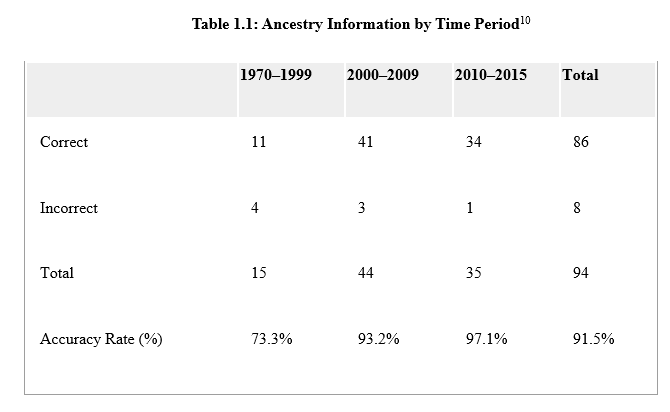
The accuracy of ancestry calculations made by forensic anthropologists on 99 identifiable persons was investigated recently. When one considers just cases with a single ancestry estimate, the general accuracy percentage was 90.9%; it dropped somewhat to 88.3%.10 The study notes a possible positive skew in the accuracy rate since unidentified cases with inaccurate predictions probably wouldn't be included in the sample. Nevertheless, the identifying techniques applied, such as previous research or DNA database comparisons, have resulted in a minor inclination.
Using multiple factors; practitioner education, date, real ancestry, predicted ancestry, and metric analysis, the study examined accuracy. The practitioner's degree of education, M.A., Ph.D., or D-ABFA certification, had no appreciable effect on accuracy. With accuracy rising over time, 73.3% pre-2000, 93.2% from 2000-2009, and 97.1% from 2010-2015, a noteworthy variation (p = 0.03) was noted depending on the time period of analysis.10 This points to overtime improvement in methods along with data.
Comparatively using a three-group model with a more exact five-group model, another study assessed the accuracy of ancestry estimations from 1972 to 2019.11 With no statistically significant difference overall between them, the study found that both models performed with almost exactly identical overall accuracy rates. The simpler three-group model accurately categorized a young man of Asian/Pacific Islander descent, first misclassified as Hispanic in the five-group model. Although general accuracy stayed above 90%, a temporal study revealed that the most recent decade (2000–2019) had the best accuracy (93.1% to 93.9% depending on the model), followed by the oldest period (1972–1999) at 92.3%. Fascinatingly, accuracy dropped to 86.2% in the decade 2000–2009; this change was not statistically significant.
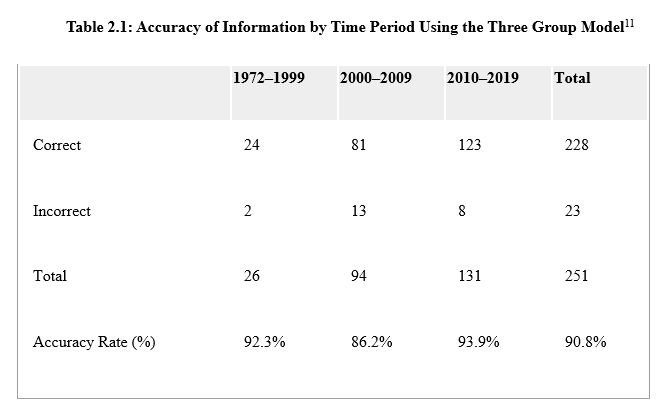
Using FBI data, the first study drew on research and techniques evolved over the past century and used morphological and metric approaches for ancestry estimate. This method, which used a wider spectrum of analytical instruments, showed a better success rate in ancestry estimate, especially from the year 2000 onward, than in the second study, which depended just on a three-group model. Although both studies show a general trend of increased accuracy over time, the more thorough approach of the first study and the noted leap in accuracy after 2000 imply that developments in methodologies and data processing were of some significance. However, we must recognize how technology has shaped these better results. More precise and dependable ancestry calculations have come from the invention and improvement of statistical tools, better imaging technologies like CT scanning and 3D modeling, and the expansion of increasingly varied and complete skeleton databases. More precise and dependable results follow from forensic anthropologists' increased ability to examine skeletal remains with more accuracy, include more extensive information, and create more complex statistical models made possible by these technical advancements. As the results of the first study emphasize, this blend of the mixed method approach and technical advancement most likely explains the increased success rates noted in more recent investigations.
Challenges in Determination
Ancestral estimate is significantly hampered by the difficulties presented by admixture. Many people have ancestry from several geographic areas; hence it is challenging, if not impossible, to classify them into a single identifiable ancestral group. Often assuming separate ancestral groupings, traditional techniques often find it difficult to fairly depict admixed people.13 Recently, admixture mapping and ancestry informative markers (AIMs) in DNA research have given important new perspectives on population structure and mixing trends. In forensic settings, integrating these genetic results with morphological and metric data remains a continuous and vital focus of study. Development of more precise and complex techniques for assessing ancestry in admixed people depends on this integration. An individual having both African and European background, for instance, can show a mix of physical and metric characteristics linked with both ancestral populations. Integrating genetic data can help to separate these intricate patterns and offer a more precise and useful estimate of ancestry.
Reference Database Limitations
The restrictions on the available reference data present still another difficulty. Comparative databases of skeletal dimensions and morphological features from people of known ancestral backgrounds form the foundation of ancestry calculations. These databases are sometimes biased, incomplete, and not entirely reflective of world human variety. Many of the current collections are strongly biased toward people of European background, which results in less accurate assessments for people from underrepresented groups.14 This underrepresentation can help to maintain current disparities in the forensic system, therefore impeding attempts to identify people from these backgrounds. The historical background of some bone collections begs ethical questions since some of them were acquired by means of immoral or exploitative methods. This calls for serious thought on the ethical consequences and provenance of employing such collections in present-day forensic investigations.
The techniques applied for ancestry estimate also provide natural difficulties. Conventional morphoscopic techniques, which rely on visual evaluation of skeletal features, are arbitrary and prone to interobserver error. Although more objective metric approaches, which entail exact measurements of skeletal traits, offer higher accuracy. However, they are still limited because of the complicated link between skeletal shape and lineage. These measurements are analyzed, and probabilistic estimations are produced using statistical techniques including more current machine learning algorithms and discriminant function analysis. However, the quality and representativeness of the reference data used to create these approaches determine their degree of accuracy. Moreover, these statistical models can provide overlapping probabilities, which makes it challenging to exactly identify a person to a specific ancestral group.
Technological Advancements
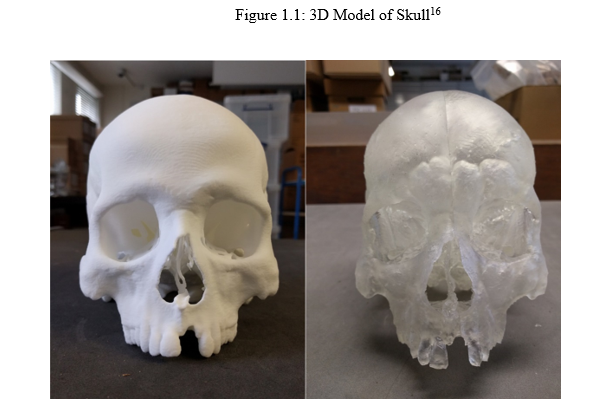
Forensic anthropology has been transformed by the growing availability and reasonable cost of digital photography and three-dimensional (3D) scanning technologies. Apart from enabling geometric morphometrics and remote teamwork, 3D technologies integration in forensic anthropology presents additional major developments. Rebuilding fractured or injured skeletal remains is one of the significant concerns.15 Conventional approaches of rebuilding can be prone to inaccuracies and be time-consuming or labor-intensive. Even in cases when fragments are absent, 3D scanning facilitates the computer restoration of broken bones. Using mirroring and manipulation, specialized software can realistically patch together fragments to create a more whole portrayal of the actual bone. Apart from saving important time, this digital reconstruction enables non-destructive research and repetitive virtual manipulations free from risk of additional damage to the delicate remains. In circumstances involving commingled remains or those obtained from difficult surroundings, this is especially important.
Furthermore, 3D scanning and printing change how forensic scientists analyze antemortem and postmortem trauma. Forensic anthropologists can investigate the type, direction, and force of the inflicted injuries by precise 3D modeling of skeletal parts showing trauma. This can be quite helpful in understanding the mechanism of damage and rebuilding the circumstances surrounding a death. 3D models allow examination with more accuracy, such as; the trajectory of projectile trauma, the pattern of blunt force trauma, or the traits of sharp force trauma. Physical replicas for comparative study with possible weapons or other objects engaged in the incident can also be produced from these models.
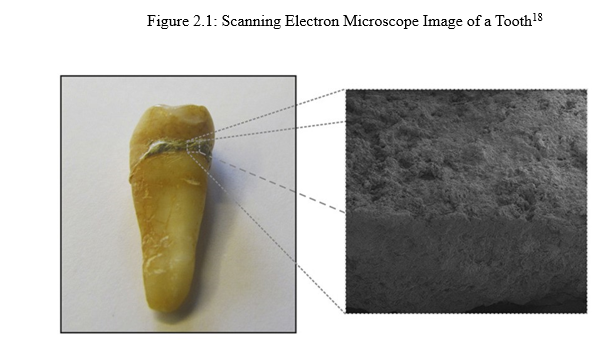
Offering a potent method of microscopic analysis of skeletal remains and related materials, the scanning electron microscope (SEM) has become a crucial instrument in forensic anthropology.
Unlike conventional light microscopy, which is constrained by the wavelength of visible light, SEM scans the surface of a sample using a concentrated electron beam.17 High-resolution images with far more magnification and depth of field produced by this interaction expose features undetectable to the unaided eye or traditional microscopes. In forensic anthropology, this capacity is essential for examining a variety of trauma, taphonomy, and trace material related evidence. Characteristic X-rays, backscattered electrons, and secondary electrons are among the signals produced as the electron beam interacts with the material. Emitted from the surface atoms of the sample, secondary electrons are the main signal used to produce topographical pictures and offer comprehensive information on surface texture and shape.10 Reflecting from the sample, backscattered electrons reveal elemental makeup of the sample; heavier elements show brightness in the image.
In forensic anthropology, SEM is very useful for trauma to bone analysis. Microscopic study of fractured surfaces can expose important information on the type of force used, like sharp force trauma or blunt force trauma. By exposing different microscopic traits of the fracture edges, SEM can differentiate between these kinds of trauma. For example, while blunt force trauma usually shows irregular, jagged edges with signs of crushing and radiating fractures, sharp force trauma usually shows smooth, clearly defined edges with microscopic striations left by the cutting instrument. Furthermore, revealing details on the type of instrument used, the direction of the cut, and even the number of strokes is the analysis of cut marks on bone under SEM. In taphonomic investigations, SEM is important outside trauma analysis.
It can be used to evaluate the degree of weathering, erosion, and other postmortem changes to bone produced by external elements including sunshine, temperature swings, and moisture. Estimating the postmortem interval, that is, the period since death, requires this knowledge. For instance, SEM can expose bone surfaces typical of particular stages of weathering microscopic cracking and flaking patterns. It can also be used to find minute evidence of insects or other animals that have interacted with the bones, so offering more hints regarding the postmortem surroundings and time passed after death. Although not a main instrument for estimating ancestry like metric analysis or morphological observation of the skull, in some forensic anthropological situations, especially when dealing with fractured or altered remains, the SEM can offer important additional information.
Additionally, SEM can help to examine bone microstructure, especially in cases with fractured remains. Considering the SEM can magnify up to 150,000x, forensic scientists can examine osteoclasts, osteoblasts, and osteocytes and how they interact within the bone matrix.17 Examining the microscopic arrangement of bone tissue may help one to find minute variations that match ancestry.
In taphonomic research, which indirectly guides ancestry estimate, SEM is also rather important. SEM can help to recreate the postmortem history of the bones by looking at minute surface changes in bone, like marks of animal scavenging, weathering patterns, or evidence of burning. Differentiating between antemortem and postmortem modifications and evaluating the validity of macroscopic features applied for ancestry estimate depends on an awareness of these taphonomic processes. For example, if SEM shows significant weathering on a bone surface, it could imply that environmental exposure has changed some morphological features, therefore compromising their accuracy for ancestry estimate.
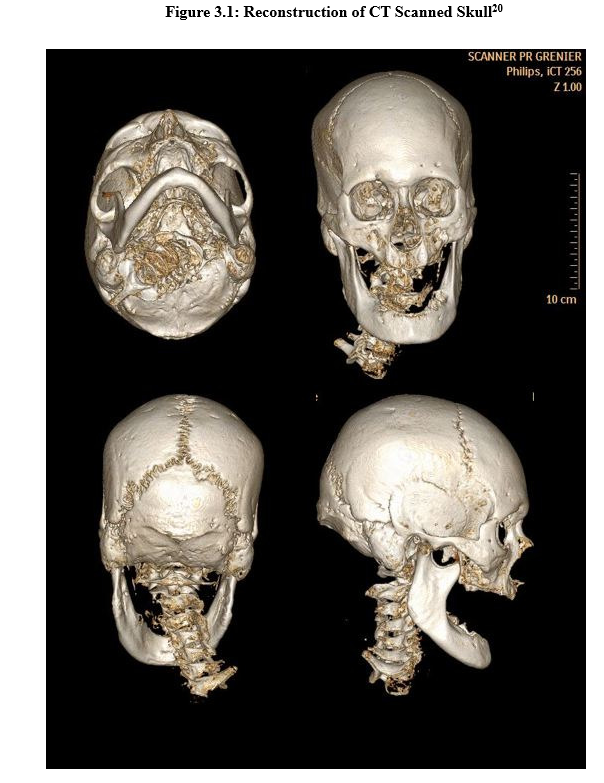
Mostly concentrating on the skull because of its rich source of ancestry-related morphological features, forensic anthropologists use CT scans as a potent weapon to extract ancestry information from skeletal remains. Detailed three-dimensional images of the skull made possible by CT scans provide a thorough study of internal as well as external architecture. CT scans provide access to internal cranial elements not often seen by external investigation, including inner ear structures, sinus structure, and cranial vault thickness.19 Variations in these internal characteristics have demonstrated relationships with various ancestral populations, therefore offering important extra information.
CT data's digital form makes exact and reproducible metric measurements of several cranial and face dimensions possible. These measures can be included into more sophisticated methods such as geometric morphometrics, which examines general shape by means of minute changes in anatomical landmarks and curves, or they can be employed in conventional statistical analysis. This approach is especially helpful for evaluating cranial shape since it is known to show appreciable population-level variation linked with ancestry. CT scans provide virtual reconstruction in cases of fractured or damaged skulls, therefore enabling examination of either whole or nearly complete structures even in circumstances when physical repair is not possible. When handling commingled remains or those taken from difficult taphonomic settings, this is very important. CT scans improve the accuracy, objectivity, and extent of ancestry estimate in forensic anthropology by offering thorough 3D visualization, access to interior structures, exact metric data, and virtual reconstruction facilitation.
New directions of research for ancestry estimates have been opened by the development of sophisticated statistical modeling and machine learning methods. These methods can investigate large and complex sets of morphological, metric, and even genomic data to identify subtle trends and connections that could be difficult or impossible to detect using traditional statistical approaches. Automated and maybe more objective estimations of ancestry are generated by teaching machine learning algorithms including random forests, support vector machines, and neural networks to identify individuals based on their skeletal features.21 It is highly necessary that these algorithms be trained on diverse, representative, well-documented datasets in order to avoid prejudices and maintain extant inequalities. Ancestral estimate using machine learning begs ethical challenges requiring rigorous and critical analysis including issues of data privacy, algorithmic bias, and possible use of ancestry data.
Conclusion
Ancestral estimation is crucial in forensic anthropology to help identify unknown human remains. It narrows the probable match count when compared to missing persons databases, therefore generating valuable investigative leads. Still, it's crucial to understand that ancestry estimate by itself cannot be a trustworthy identifying tool. It should always be applied in concert with other identification tools like dental data, DNA analysis, and fingerprint analysis. It offers a probabilistic analysis grounded on bone form.
Forensic anthropologists have a professional and ethical responsibility to actively educate the public about the inherent limits and complexity of this process, advocate the responsible and contextualized use of ancestry information, and constantly improve the techniques used in ancestry estimate. Future research should focus on abandoning trait lists and the three-group model, developing larger and more diverse reference datasets, refining mixed-method models, creating new statistical techniques, and updating software tools. Additionally, adding 3D models, SEM analysis, and CT scans could help in these developments. Methodological development calls for constant extension and variety of reference datasets as well as continuous research into new approaches including geometric morphometrics and advanced statistical modeling. Forensic anthropology can remain important in supporting identification efforts, advancing justice for the unidentified, and promoting a more complex and accurate knowledge of human diversity by means of rigorous research, ethical practice, and open communication addressing these difficulties.
References
1. Rhine S. Non-metric skull variation in ancestry determination. In: Gill GW, Rhine S, eds. Skeletal Attribution of Ancestry in Forensic Anthropology. University of New Mexico; 1990:9-20. Maxwell Museum of Anthropology Anthropological Papers No. 4.
2. Ousley SD, Jantz RL. Fordisc 3 and statistical methods for estimating sex and ancestry. In: Dirkmaat DC, ed. A Companion to Forensic Anthropology. Wiley-Blackwell; 2012:311-329.
3. Summary Sex: A Multivariate Approach to Sex Estimation from the Human Pelvis. LJMU Research Online. Accessed April 22, 2026. https://researchonline.ljmu.ac.uk/id/eprint/9471/
4. Pilli E, Palamenghi A. Forensic skeletal and molecular anthropology face to face: Combining expertise for identification of human remains. Ann NY Acad Sci. 2025;15398. doi:10.1111/nyas.15398
5. Piegari G, De Pasquale V, d’Aquino I, et al. Evaluation of muscle proteins for estimating the post-mortem interval in veterinary forensic pathology. Animals. 2023;13(4):563. doi:10.3390/ani13040563
6. Vianney Ramírez Ojeda S, Hernandez Mier C. Postmortem interval ocular indicators. In: Contemporary Issues in Clinical Bioethics - Medical, Ethical and Legal Perspectives. IntechOpen; 2024. doi:10.5772/intechopen.107965
Prev 1 7. National Library of Medicine. Understanding Human Genetic Variation. Nih.gov. Published 2007. https://www.ncbi.nlm.nih.gov/books/NBK20363/
Prev 2 8. Miller M. Accuracy of Ancestry Estimation in Forensic Anthropology: An Examination of Select Nonmetric Methods. UAB Digital Commons. Published 2023. https://digitalcommons.library.uab.edu/etd-collection/79/
Prev 3. 9. Murphy RE, Garvin HM. A Morphometric Outline Analysis of Ancestry and Sex Differences in Cranial Shape. Journal of Forensic Sciences. 2017;63(4):1001-1009. doi:https://doi.org/10.1111/1556-4029.13699
Prev 4. 10. Thomas RM, Parks CL, Richard AH. Accuracy Rates of Ancestry Estimation by Forensic Anthropologists Using Identified Forensic Cases. Journal of Forensic Sciences. 2017;62(4):971-974. doi https://doi.org/10.1111/1556-4029.13361
Prev 5. 11. Winburn AP, Algee‐Hewitt B. Evaluating population affinity estimates in forensic anthropology: Insights from the forensic anthropology database for assessing methods accuracy (FADAMA). Journal of Forensic Sciences. 2021;66(4). doi:https://doi.org/10.1111/1556-4029.14731
Prev 6. 12. Dunn RR, Spiros MC, Kamnikar KR, Plemons AM, Hefner JT. Ancestry estimation in forensic anthropology: A review. WIREs Forensic Science. 2020;2(4). doi:https://doi.org/10.1002/wfs2.1369
Prev 7. 13. Tang H, Coram M, Wang P, Zhu X, Risch N. Reconstructing Genetic Ancestry Blocks in Admixed Individuals. The American Journal of Human Genetics. 2006;79(1):1-12. doi:https://doi.org/10.1086/504302
Prev 8. 14. Ross AH, Williams SE. Ancestry Studies in Forensic Anthropology: Back on the Frontier of Racism. Biology. 2021;10(7):602. doi:https://doi.org/10.3390/biology10070602
Prev 9. 15. Oriola LS, Oller NA, Martínez-Abadías N. Virtual Anthropology: Forensic applications to cranial skeletal remains from the Spanish Civil War. Forensic Science International. 2022;341:111504. doi:https://doi.org/10.1016/j.forsciint.2022.111504
Prev 10. 16. Scott C. How Accurate is 3D Printing for Reconstructing Forensic Evidence? 3DPrint.com | The Voice of 3D Printing / Additive Manufacturing. Published October 16, 2018. https://3dprint.com/227485/3d-printing-for-reconstructing-forensic-evidence/
Prev 10. 17. Leonard DN, Chandler GW, Seraphin S. Scanning Electron Microscopy. Characterization of Materials. Published online October 12, 2012. doi:https://doi.org/10.1002/0471266965.com081.pub2
Prev 12. 18. Power RC, Salazar‐García DC, Wittig RM, Henry AG. Assessing use and suitability of scanning electron microscopy in the analysis of micro remains in dental calculus. Journal of Archaeological Science. 2014;49:160-169. doi:https://doi.org/10.1016/j.jas.2014.04.016
Prev 13. 19. Florkow MC, Willemsen K, Mascarenhas VV, Oei EHG, Stralen M, Seevinck PR. Magnetic Resonance Imaging Versus Computed Tomography for Three‐Dimensional Bone Imaging of Musculoskeletal Pathologies: A Review. Journal of Magnetic Resonance Imaging. 2022;56(1). doi:https://doi.org/10.1002/jmri.28067
Prev 14. 20. Charlier P, I. Huynh-Charlier, J. Poupon, et al. Multidisciplinary medical identification of a French king’s head (Henri IV). BMJ. 2010;341(dec14 2):c6805-c6805. doi:https://doi.org/10.1136/bmj.c6805
Prev 15. 21. Barash M, McNevin D, Fedorenko V, Giverts P. Machine learning applications in forensic DNA profiling: A critical review. Forensic Science International: Genetics. 2023;69:102994. doi:https://doi.org/10.1016/j.fsigen.2023.102994